I say likely, because I am wise enough to know that absolutes are generally just disappointments waiting to happen.
For me, this whole homesteading idea and gardening thing is about slowing down just a bit, figuring out what we can do on our own, and what maybe we can do without. Here are three things I will be hard pressed to buy again:
Jam- I blogged about my learning to make jam last summer and I am hooked. For the last 7 months my family has happily had their jam needs met with delicious fruity goodness that was made with love and as little sugar as possible. We had strawberry, peach, and blueberry. I'm looking forward to working with new fruits as the season progresses.
Croutons- Dried crusty bread was an eye opening experience for me. I blogged about it here, but the gist was simple-I wondered how I could readily become more self sufficient, how many of those things I rely on the supermarket to provide I could just make on my own. Croutons is one of those I can easily do on my own with great results.
Yogurt- Inspired by the frugal girl, I gave yogurt making a whirl and was pleased by the results. I used 1% milk as that is just what works for our family. I let it set a bit more than 3 hours to get the set firmer. I've also strained it to make Greek yogurt and then used the whey for smoothies for the smalls. This is a bit time consuming, but so very cost effective.
Next on my radar is making soft cheeses like ricotta and mozzarella, so stay tuned.
What have you come to enjoy making on your own? What do you hope to add to your skill set in the future?
Sunday, March 3, 2013

Friday, March 1, 2013
The learning curve
The seeds for this idea planted themselves almost a year ago, and as we approach spring and the major planting season, we are well on our way. Here are some highlights of what I've learned so far.
Don't over think it-It's important to be educated, but as with most things, the right and wrong way to do something is largely a matter of opinion and varies drastically depending on your growing region.
Double planting isn't for me-I'd seed the idea of planting carrots and lettuce in the same section of garden. The idea is you can harvest the lettuce and then let the carrots finish growing. The issue here is I planted a leaf lettuce that could be cut and harvested repeatedly so the carrots never got their time to shine and grow.
Sewing seeds carefully is worth the time-For our first bed I way over sewed the seeds with every intention of thinning it appropriately. It turns out a suck at thinning the plants and would be better served to plant them more carefully.
Write things down-Our front room is covered in seedlings, we have things going into the ground already, we have big plans for the rest of it and it would be easy to lose track of things.
Connect with local resources-I first met folks from the Marin Master Gardeners at our local farmer's market. They have a wealth of knowledge and a genuine desire to share that knowledge. I've also found that the folks at our local nurseries and garden stores are deeply passionate about what they do and have tons of experience to draw on.
Be steadfast-Tending a garden is a slow process and takes awhile to reap the rewards.
Don't over think it-It's important to be educated, but as with most things, the right and wrong way to do something is largely a matter of opinion and varies drastically depending on your growing region.
Double planting isn't for me-I'd seed the idea of planting carrots and lettuce in the same section of garden. The idea is you can harvest the lettuce and then let the carrots finish growing. The issue here is I planted a leaf lettuce that could be cut and harvested repeatedly so the carrots never got their time to shine and grow.
Sewing seeds carefully is worth the time-For our first bed I way over sewed the seeds with every intention of thinning it appropriately. It turns out a suck at thinning the plants and would be better served to plant them more carefully.
Write things down-Our front room is covered in seedlings, we have things going into the ground already, we have big plans for the rest of it and it would be easy to lose track of things.
Connect with local resources-I first met folks from the Marin Master Gardeners at our local farmer's market. They have a wealth of knowledge and a genuine desire to share that knowledge. I've also found that the folks at our local nurseries and garden stores are deeply passionate about what they do and have tons of experience to draw on.
Be steadfast-Tending a garden is a slow process and takes awhile to reap the rewards.
Thursday, February 28, 2013
Meanwhile out in the garden
I wrote previously about our first attempt at a winter garden. Our brassica bed with kale, romanesco, and broccoli was what one might call less than stellar. Typically one hopes for heads of broccoli and romanesco. We harvested florets. The kale was fine, but we didn't get a huge amount. In all fairness though, we put it in really late and barely paid it any mind.
Our other bed was a mix of carrots, lettuces, arugula, parsley, cilantro, green onions, spinach, and Swiss chard. We had a decent harvest, with ample lettuces, arugula, and cilantro. In preparation for our spring planting, we made our last harvest so we can get the bed ready for tomatoes and peppers. We had very little in the way of carrots and pretty low expectations at this point, so I was pleasantly surprised to harvest this:


Most of them were small, but we ended up with about a pound of fresh crisp, sweet yumminess. And to think I thought the carrots were a total bust.
In addition we had a large bowl packed with lettuce and a huge amount of cilantro. The lettuce we used right away and I saw a TV chef freeze fresh parsley so I'll give our cilantro the cold shoulder and see how that works out!


Our other bed was a mix of carrots, lettuces, arugula, parsley, cilantro, green onions, spinach, and Swiss chard. We had a decent harvest, with ample lettuces, arugula, and cilantro. In preparation for our spring planting, we made our last harvest so we can get the bed ready for tomatoes and peppers. We had very little in the way of carrots and pretty low expectations at this point, so I was pleasantly surprised to harvest this:


Most of them were small, but we ended up with about a pound of fresh crisp, sweet yumminess. And to think I thought the carrots were a total bust.
In addition we had a large bowl packed with lettuce and a huge amount of cilantro. The lettuce we used right away and I saw a TV chef freeze fresh parsley so I'll give our cilantro the cold shoulder and see how that works out!


Friday, February 1, 2013
Our Garden Plan
I started plotting out the garden beds with pen and paper, then tried a spreadsheet and while each worked just fine, I was thrilled to come upon this garden planning software. It is super easy to learn, filled with helpful information, and customizable to your particular climate. It even has good information about companion planting and crop rotation. I measured out our front and back yards, plugged the data into the software and went to town. Looking at our yard in this way actually helped us to identify more areas we could use for our edible garden.
This is the plan for our front yard:

This is the back yard:

The program also provides really helpful information about when to start indoors/outdoors and has room for personal notes.

This is the plan for our front yard:

This is the back yard:

The program also provides really helpful information about when to start indoors/outdoors and has room for personal notes.

I know the text of these images is likely to small to read, but hopefully you get the idea. We are growing the basics, tomatoes, peppers, squash, beans, and trying a few more uncommon items like rutabaga and kohlrabi.
We measure our growing area in feet rather than acres, and have been inspired by the idea of square foot gardening. I don't think we fall under the umbrella of a true square foot gardener, but we are growing most of our plants more tightly spaced than traditional recommendations. We will know is several months how this pans out!
Monday, January 28, 2013
A day in the life of a seed
I've started plants from seeds a handful of times, but watching them come to life makes me giddy. There is nothing, then poof, there is life! I wrote about starting our second batch seeds just last week. We started them on Wednesday evening. When I went to bed on Saturday night there were containers of dirt and a dream.
On Sunday at 7 am we had this:

At Noon, we had this:

At 10pm, we had this:

And this morning I awoke to this (well and a hungry kid):

It's a great way to start the week! Grow seeds grow.
Sunday, January 27, 2013
Our Seed Selections
Just before Christmas I stumbled upon a great blog Northwest Edible Life. It is full of useful information for urban gardeners and it is written with just the right sense of humor for my taste. We were deep in the seed selection process and actually experience stress over it when I read this post. It takes a very even handed and thoughtful approach to seed selection.
The bulk of our seeds came from Botanical Interests for no other reason that their selection was ample without being overwhelming and their seeds packets are beautiful and contain a lot of very useful information about growing each plant. We also purchased several seed packets from Totally Tomatoes. They offered a better selection of hybrids that we wanted as well as several larger variety tomatoes. We also have several seeds left from Cornucopia Seeds that I bought at our local Ace Hardware when we were rushing the calendar to get a garden in last fall. In all, this is what our seed selection looks like.
The bulk of our seeds came from Botanical Interests for no other reason that their selection was ample without being overwhelming and their seeds packets are beautiful and contain a lot of very useful information about growing each plant. We also purchased several seed packets from Totally Tomatoes. They offered a better selection of hybrids that we wanted as well as several larger variety tomatoes. We also have several seeds left from Cornucopia Seeds that I bought at our local Ace Hardware when we were rushing the calendar to get a garden in last fall. In all, this is what our seed selection looks like.
| Seed | Year | Source | Notes |
| Arugula Rocket Salad | 2013 | Botanical Interests | |
| Basil-Large Leaf Italian | 2012 | Botanical Interests | |
| Beans-Blue Lake | 2012 | Cornucopia | |
| Beans-Improved Tendergreen | 2012 | Cornucopia | |
| Beans-Trio | 2013 | Botanical Interests | Bush bean yellow, green, purple |
| Beet-Early Wonder Tall Top | 2012 | Cornucopia | |
| Beet-Ruby Queen | 2012 | Cornucopia | |
| Beet-Early Wonder | 2013 | Botanical Interests | |
| Beet-Gourmet Blend | 2013 | Botanical Interests | Variety of colors |
| Borage | 2013 | Botanical Interests | An edible flower that helps attact lots of bees |
| Buckwheat | 2013 | Botanical Interests | A type of green manure to grow and turn back into the soil |
| Carrot-Calliope Blend | 2013 | Botanical Interests | Multi Colored Carrots |
| Carrot-Little Finger | 2012 | Cornucopia | |
| Carrot-Tendersweet | 2012 | Cornucopia | |
| Chive | 2013 | Botanical Interests | |
| Cilantro | 2012 | Botanical Interests | |
| Cucumber-Lemon | 2013 | Botanical Interests | |
| Cucumber-Orient Express II | 2013 | Totally Tomatoes | |
| Dill | 2013 | Botanical Interests | |
| Eggplant-Hansel Hybrid | 2013 | Totally Tomatoes | |
| Kale-Italian Lacinato | 2013 | Botanical Interests | |
| Kohlrabi-Purple White | 2013 | Botanical Interests | |
| Leek-American Flag | 2013 | Botanical Interests | |
| Lettuce-Buttercrunch | 2012 | Cornucopia | |
| Lettuce-Mesclun Farmers Market Blend | 2013 | Botanical Interests | |
| Onion-Flat of Italy | 2013 | Botanical Interests | |
| Oregano | 2013 | Botanical Interests | |
| Parsley | 2012 | Botanical Interests | |
| Pea-Super Sugar Snap | 2013 | Botanical Interests | |
| Pepper-Big Chile | 2013 | Totally Tomatoes | |
| Pepper-Cayenne Purple | 2013 | Totally Tomatoes | A free packet that came with our order |
| Pepper-La Bomba Hybrid | 2013 | Totally Tomatoes | |
| Pepper-Rainbow Blend Bell | 2013 | Totally Tomatoes | |
| Radish-Cherry Belle | 2013 | Botanical Interests | |
| Radish-Easter Egg Blend | 2013 | Botanical Interests | |
| Rutabaga | 2013 | Botanical Interests | |
| Sage | 2013 | Botanical Interests | |
| Spinach-Correnta Hybrid | 2012 | Cornucopia | |
| Squash-Easypick Zucchini | 2013 | Totally Tomatoes | |
| Squash-Sunny Delight Scallop | 2013 | Totally Tomatoes | |
| Swiss Chard-Bright Lights | 2013 | Botanical Interests | |
| Swiss Chard-Fordhook | 2012 | Cornucopia | |
| Thyme | 2013 | Botanical Interests | |
| Tomato-Big Zac | 2013 | Totally Tomatoes | |
| Tomato-Brandywine Red/Yellow | 2012 | Botanical Interests | These did not produce well in 2012, but they were SO tasty. It's worth another go. |
| Tomato-Goliath | 2013 | Totally Tomatoes | |
| Tomato-Heirloom Cherry Blend | 2013 | Totally Tomatoes | A free packet that came with our order |
| Tomato-Supersweet 100 | 2012 | Botanical Interests | Bite size goodness in plentiful amounts. Perferct for the smalls to eat off the plant. |
| Turnip | 2013 | Botanical Interests |
Friday, January 25, 2013
Sowing the Seeds of Love
Forgive the painfully dated homage to the pop music of my youth... wow did I love that song.
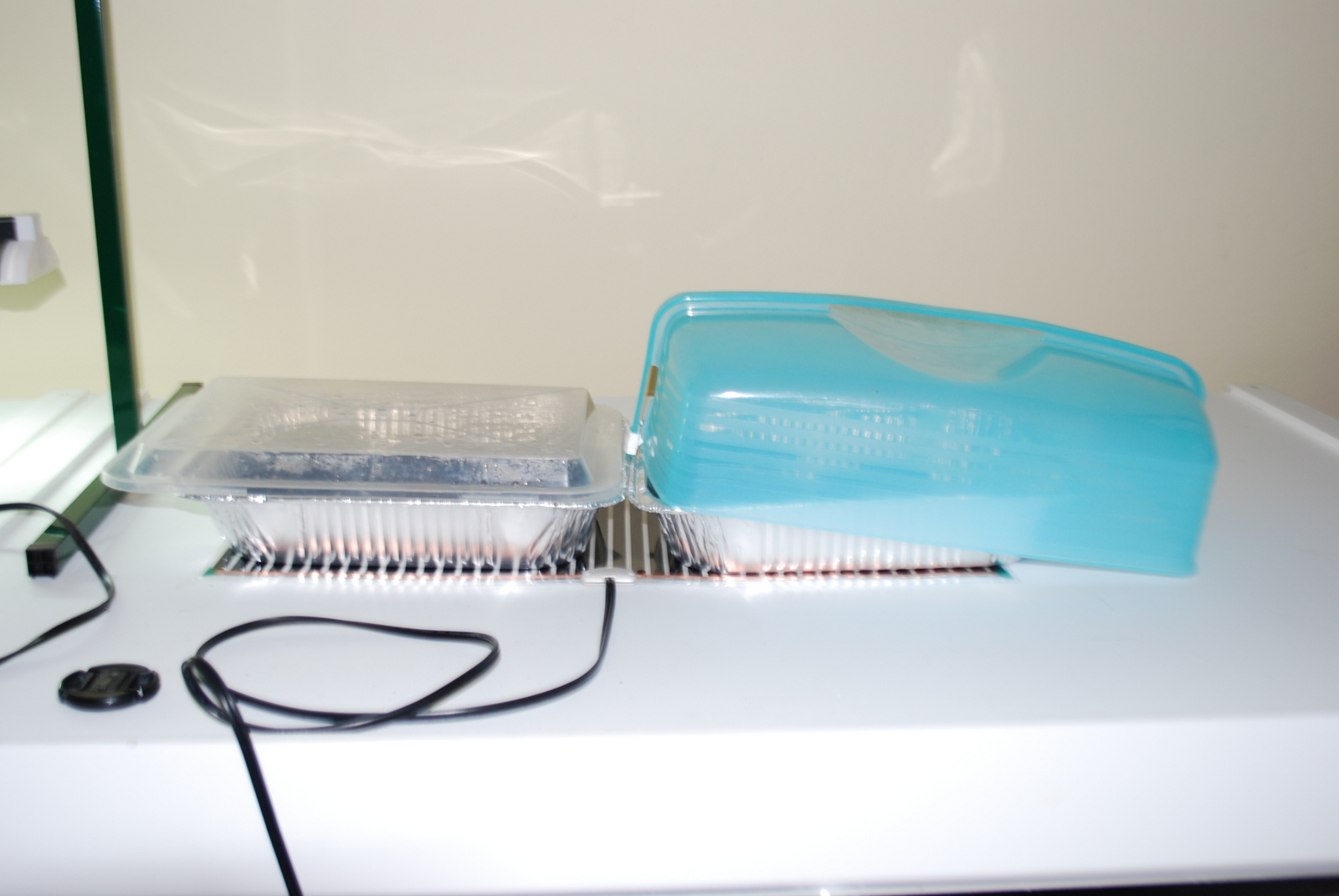
It's mid-January and we have started seeds for several of our selections indoors, namely tomatoes, peppers, eggplants, and onions. Most pepper, tomato, and eggplants recommend starting indoors 8-10 weeks before the last probable frost which is mid April for us. We should have nice plants to transplant when it is time. There are a variety of ways to start seeds and we opted to get a grow lamp , a heat mat, and a thermostat to help get the little guys off to the best start possible. Other than the seeds and these items we tried to re-purpose items before they hit the trash or recycling bin.
Egg cartons made a great way to start onions. From what I've read, they can be a bit finicky to start from seed so I way over planted what we need. It may seem silly to have the white table cloth as we did, but it helped to track down wayward seeds that otherwise would be lost against the backdrop of the table.


Watering new seedlings requires a more delicate touch so the seeds do not get displaced. This water can was inspired by something I saw on Pinterest or the inter webs somewhere and it does a fine job. It's another water bottle with small holes drilled into the top. I leave it right next to the seeds and water as needed when I check on them throughout the day.

Until the seeds start to germinate, they don't require sunlight and can benefit from a cover to help keep the environment damp. I used cake and pan lids we have on hand.
With all these seeds it's was imperative to keep track of what is what. I pre-printed labels that we will use with seed information and days to harvest. Then on planting day we wrote the date and the number of seeds that we planted. This will help us gauge how readily our plant choices this year germinate. This one is a pepper, a variety called La Bomba from Totally Tomatoes. We planted 11 seeds on 1/24.


 We are well on our way to a sizable edible garden for this spring and summer and these little sprouts are a welcome reminder that spring is just around the corner. We have our seed nursery in our front room. While we could have put it in a less visible place, this ensures they get attention throughout the day and that we get to see things right as they sprout. The smalls get a big kick out seeing what grows each day and so far they have resisted the temptation to play in our indoor dirt.
It's mid-January and we have started seeds for several of our selections indoors, namely tomatoes, peppers, eggplants, and onions. Most pepper, tomato, and eggplants recommend starting indoors 8-10 weeks before the last probable frost which is mid April for us. We should have nice plants to transplant when it is time. There are a variety of ways to start seeds and we opted to get a grow lamp , a heat mat, and a thermostat to help get the little guys off to the best start possible. Other than the seeds and these items we tried to re-purpose items before they hit the trash or recycling bin.
Egg cartons made a great way to start onions. From what I've read, they can be a bit finicky to start from seed so I way over planted what we need. It may seem silly to have the white table cloth as we did, but it helped to track down wayward seeds that otherwise would be lost against the backdrop of the table.


For the tomatoes and peppers we used berry containers and cut off bottle bottoms from sparkling water. The berry containers had holes, but we had to punch holes in the water bottle bottoms for water drainage.


Watering new seedlings requires a more delicate touch so the seeds do not get displaced. This water can was inspired by something I saw on Pinterest or the inter webs somewhere and it does a fine job. It's another water bottle with small holes drilled into the top. I leave it right next to the seeds and water as needed when I check on them throughout the day.

Until the seeds start to germinate, they don't require sunlight and can benefit from a cover to help keep the environment damp. I used cake and pan lids we have on hand.

With all these seeds it's was imperative to keep track of what is what. I pre-printed labels that we will use with seed information and days to harvest. Then on planting day we wrote the date and the number of seeds that we planted. This will help us gauge how readily our plant choices this year germinate. This one is a pepper, a variety called La Bomba from Totally Tomatoes. We planted 11 seeds on 1/24.

Germination, it typically takes place withing 7-10 days of planting, but as I learned today, don't give up too soon. These seeds were planted two weeks ago and check out this little sprout that is popping up. Look closely on the bottom between the two established seedlings. He's there!

 We are well on our way to a sizable edible garden for this spring and summer and these little sprouts are a welcome reminder that spring is just around the corner. We have our seed nursery in our front room. While we could have put it in a less visible place, this ensures they get attention throughout the day and that we get to see things right as they sprout. The smalls get a big kick out seeing what grows each day and so far they have resisted the temptation to play in our indoor dirt.
Subscribe to:
Posts (Atom)